
Met old friend dr. Narahari at the museum.. he writes teaches about history of science and knowing…. and at this point is into museums and art history. He came from Saarbrucken and meeting him after years…if not decades.
About the gallery wikipedia says
The Gemäldegalerie (German pronunciation: [ɡəˈmɛːldəɡaləˌʁiː], Picture Gallery) is an art museum in Berlin, Germany, and the museum where the main selection of paintings belonging to the Berlin State Museums (Staatliche Museen zu Berlin) is displayed. It holds one of the world’s leading collections of European paintings from the 13th to the 18th centuries. Its collection includes masterpieces from such artists as Albrecht Dürer, Lucas Cranach, Hans Holbein, Rogier van der Weyden, Jan van Eyck, Raphael, Botticelli, Titian, Caravaggio, Giambattista Pittoni, Peter Paul Rubens, Rembrandt, Johannes Vermeer, and Antonio Viviani. It was first opened in 1830, and the current building was completed in 1998.
 the museum has some most interesting shapes…..and am thinking of doing something like this (just the sides) in my new place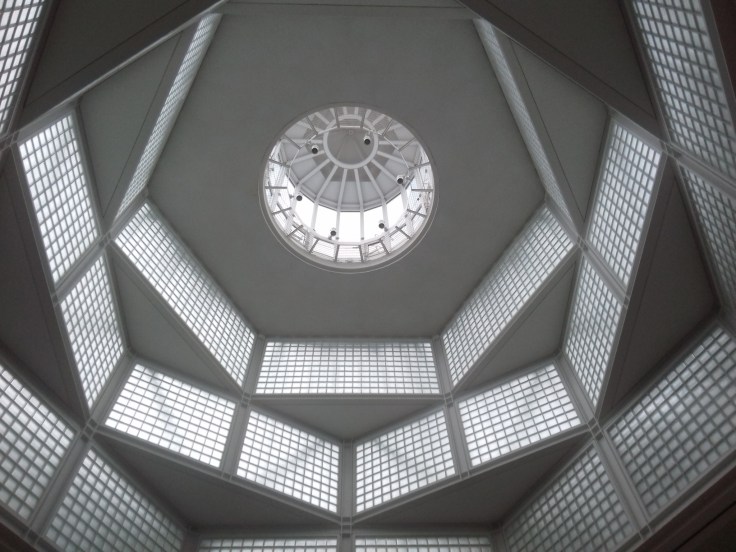
a hall full of interesting posters


there are rooms after rooms after rooms of reubens, vandyke, lots of painters, lots of pictures from churches, …have got those earphone audio guides and at least understood why some pictures are so important…..
but the highlight was the bruegel the elder…. where over 100 parables are contained within one canvas…there is a card which shows you numbers of where and what in the picture it is…and then the Proverbs that are associated with it…
amazing…awesome… i spend over an hour finding the part of the painting and laughing as I read the proverb… it is like a tapestry of life… showing all its follies….not great reproductions..
wikipedia says
Netherlandish Proverbs (Dutch: Nederlandse Spreekwoorden; also called Flemish Proverbs, The Blue Cloak or The Topsy Turvy World) is a 1559 oil-on-oak-panel painting by the Flemish artist Pieter Bruegel the Elder that depicts a scene in which humans and, to a lesser extent, animals and objects, offer literal illustrations of Dutch language proverbs and idioms.
Running themes in Bruegel’s paintings are the absurdity, wickedness and foolishness of humans, and this is no exception. The painting’s original title, The Blue Cloak or The Folly of the World, indicates that Bruegel’s intent was not just to illustrate proverbs, but rather to catalog human folly. Many of the people depicted show the characteristic blank features that Bruegel used to portray fools.[1]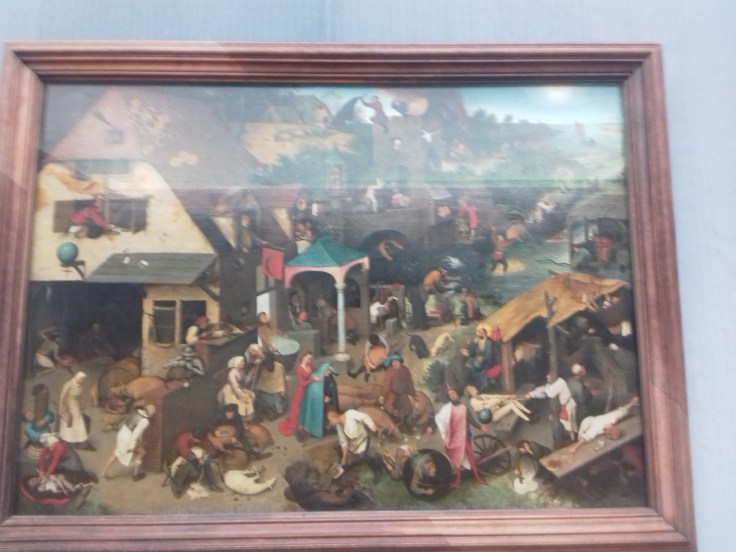
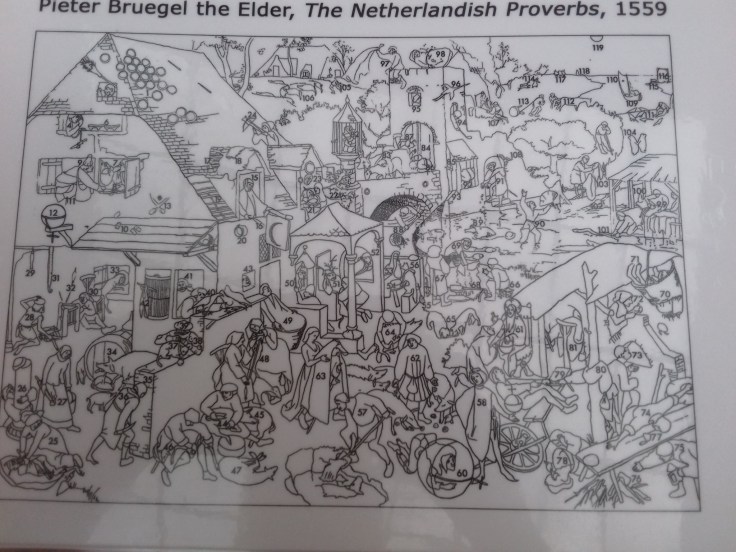
the list of proverbs are…
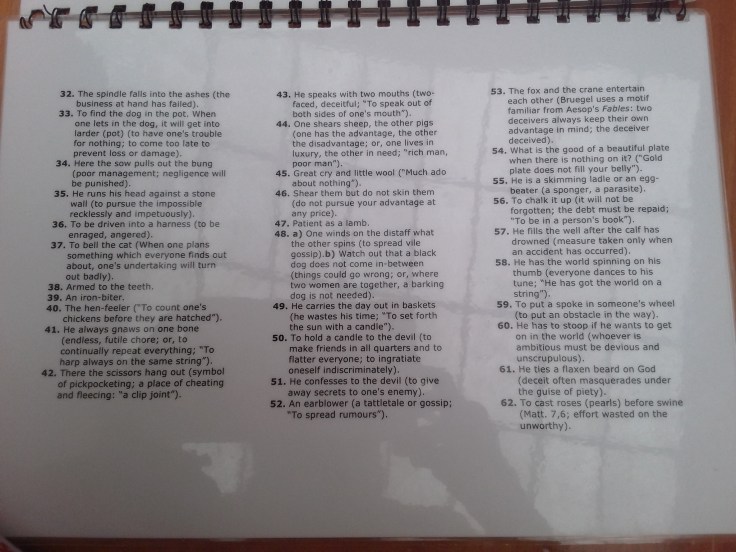
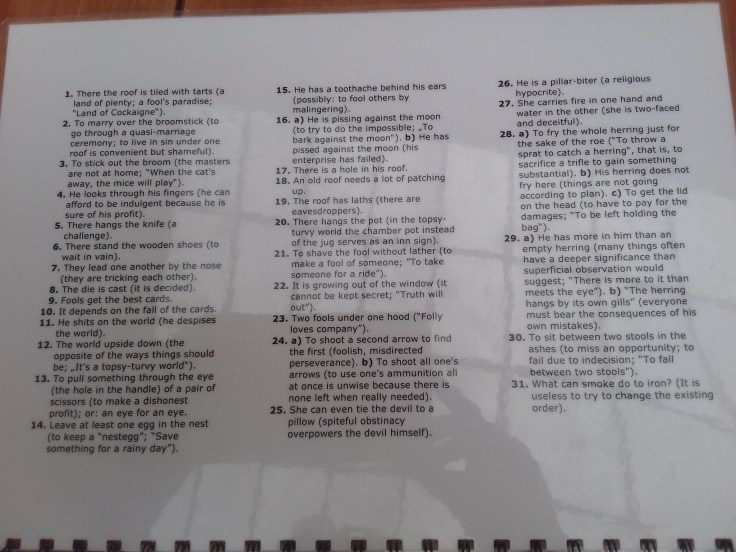
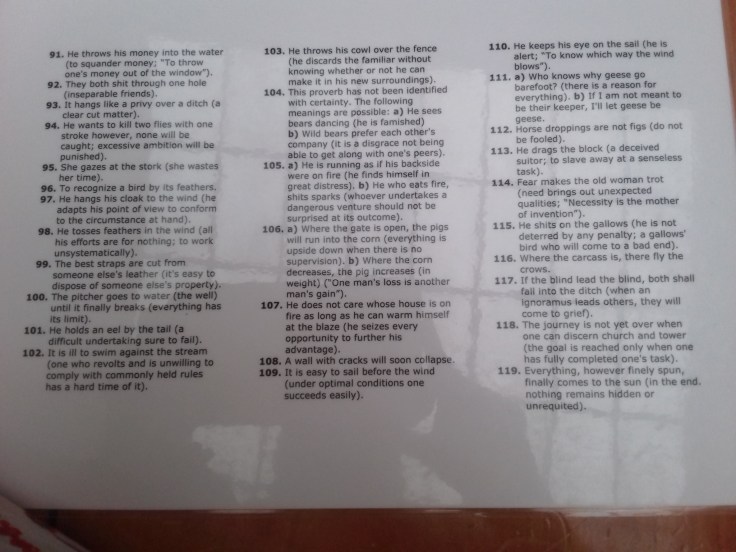
its unclear…. you can see the full list in https://en.wikipedia.org/wiki/Netherlandish_Proverbs
bsolutely fun and its stories and stories and stories….
 Mira's Magical Mystical Tour